
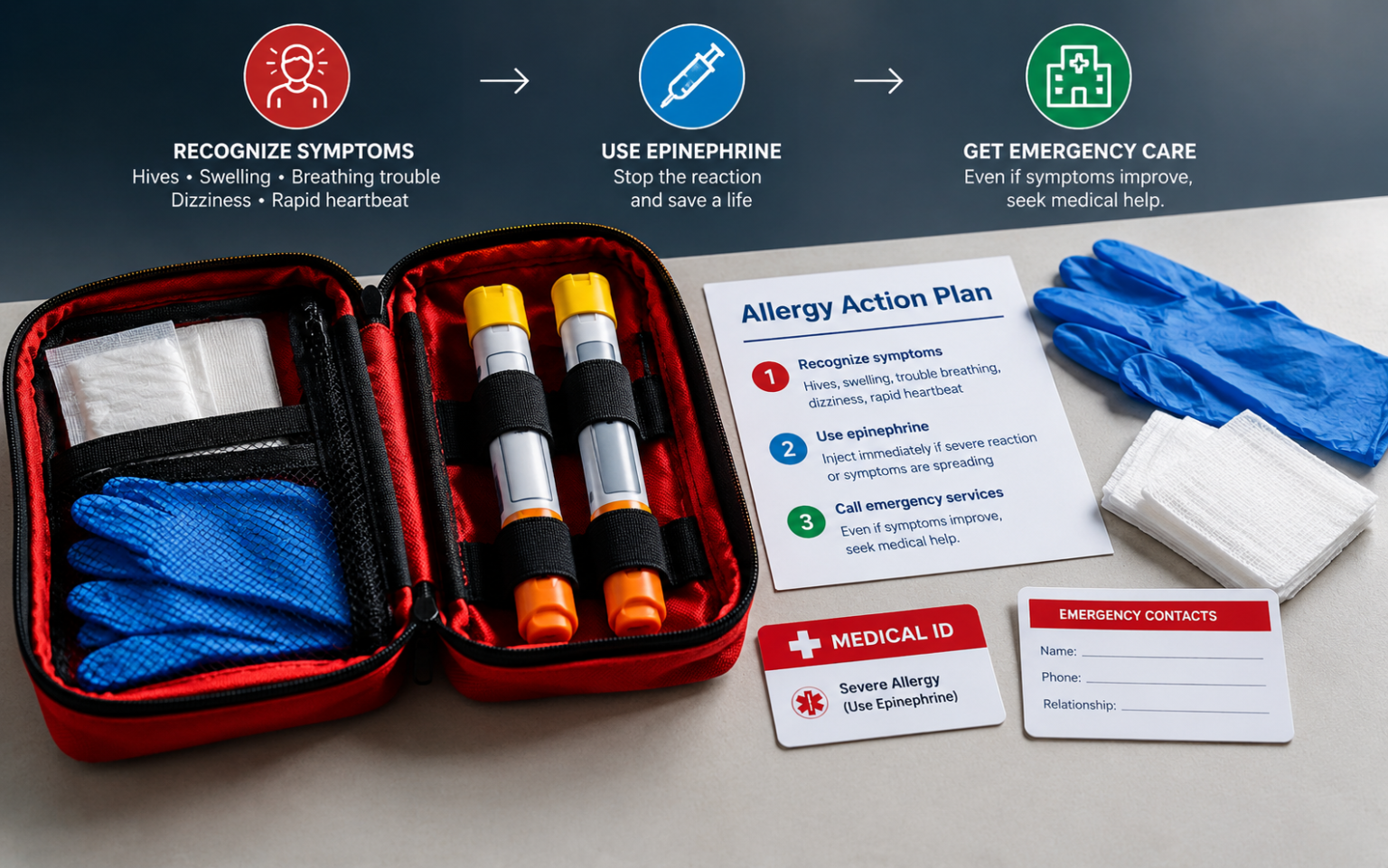
An anaphylaxis kit is built for one purpose: rapid emergency response.
Anaphylaxis can develop within minutes. It may affect breathing, blood pressure, the skin, and the digestive system. Food, medicines, and insect stings are common triggers.
The most important medicine in an anaphylaxis emergency is epinephrine. Medical guidance recommends prompt epinephrine when anaphylaxis is suspected.
A kit therefore does more than hold medicine. It keeps emergency information, supplies, and treatment together. That organization can reduce dangerous delays.
This guide explains what an anaphylaxis kit should contain, how it fits into an emergency plan, and how to keep it ready.
Anaphylaxis Kit at a Glance
| Item | Key Information |
|---|---|
| Primary medicine | Epinephrine auto-injector or prescribed epinephrine device |
| Emergency plan | Written anaphylaxis action plan |
| Identification | Allergy or medical identification information |
| Extra supplies | Items recommended by the patient’s healthcare professional |
| Storage | Follow the device manufacturer’s storage instructions |
| Replacement | Check expiration dates regularly |
| Training | Patient, family, caregivers, and relevant staff should know the plan |
The exact contents vary by person. A healthcare professional should determine the prescribed epinephrine device and dose. Current practice guidance also considers individual risk when deciding whether someone should carry more than one epinephrine device.
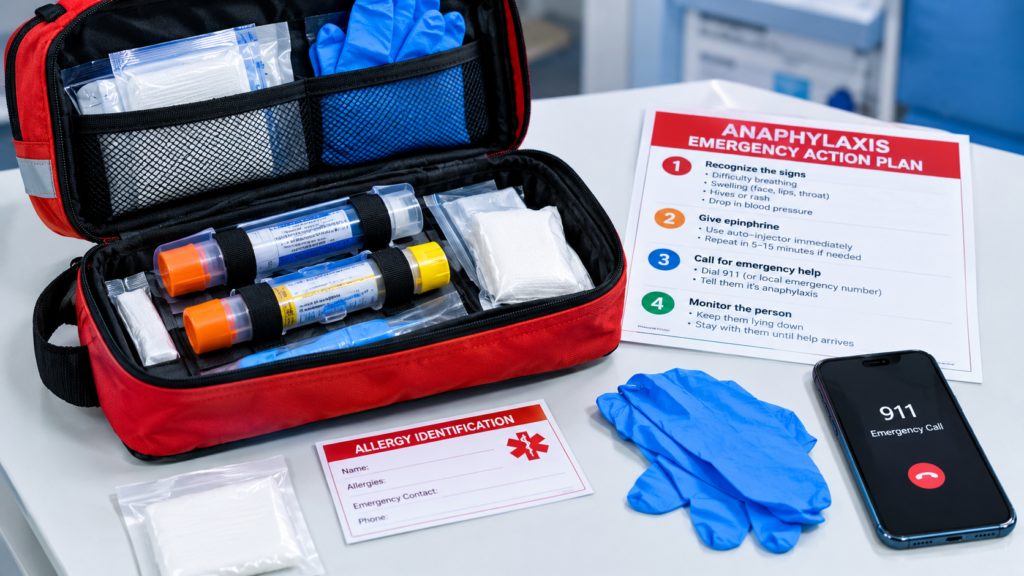
Why an Anaphylaxis Kit Can Be So Important
Anaphylaxis is different from an ordinary allergic reaction.
Symptoms can progress quickly. Breathing difficulty, throat swelling, dizziness, low blood pressure, vomiting, wheezing, and collapse can occur. Some people may develop anaphylaxis without obvious skin symptoms. CDC guidance notes that 10% to 20% of patients may have no skin findings.
That makes preparation especially valuable.
A person may know their allergy. Yet knowing the allergy is only one part of emergency readiness.
The next step is having the prescribed treatment nearby.
AAAAI advises people with prescribed epinephrine to understand when and how to use it. The organization also recommends carrying the medication and replacing it before expiration.
An emergency kit keeps those preparations together.
For families, this can simplify communication. Fo schools and workplaces, it can help staff understand the emergency plan. For travelers, it can keep essential supplies organized in one place.
The kit should remain easy to locate.
A locked drawer or inaccessible cupboard can create unnecessary delays.
What Should an Anaphylaxis Kit Contain?
There is no single universal kit for every person.
The central item is prescribed epinephrine. Depending on the country and prescription, this may be supplied through an auto-injector or another approved delivery system. AAAAI’s current educational material recognizes both injectable and intranasal epinephrine options.
The kit can then contain supporting information and supplies.
Epinephrine device: Keep the prescribed device readily accessible. Follow the prescription and manufacturer’s instructions.
Emergency action plan: Keep a written plan with the kit. It should explain the person’s allergy, symptoms, medication, and emergency steps.
Medical identification: An allergy card or medical ID can help others recognize the condition when the person cannot communicate.
Contact information: Include emergency contacts and relevant healthcare information when appropriate.
Backup supplies: Additional items may be included when recommended by a healthcare professional or required by a specific setting.
NIAID guidance recommends an epinephrine auto-injector or prescription for two doses, training on its use, follow-up care, allergy education, and an anaphylaxis emergency action plan.
The kit should not become overloaded with unnecessary products.
The goal is speed.
Recognizing an Emergency Before It Escalates
A kit only helps when people recognize the emergency.
Anaphylaxis can produce several symptoms at once. These can include hives, swelling, coughing, wheezing, difficulty breathing, dizziness, vomiting, abdominal pain, and loss of consciousness.
Rapid progression matters.
A person does not need to wait for every possible symptom to appear. AAAAI guidance recommends epinephrine at the first sign of suspected anaphylaxis for people who have it prescribed.
Breathing problems: Wheezing, throat swelling, or severe breathing difficulty can signal a dangerous reaction.
Circulation problems: Dizziness, fainting, or collapse may indicate severe cardiovascular involvement.
Skin changes: Hives, flushing, itching, and swelling commonly occur.
Digestive symptoms: Vomiting, abdominal pain, or diarrhea can accompany severe reactions.
The emergency response should follow the individual’s medical action plan.
Epinephrine is the first-line treatment for anaphylaxis. CDC guidance states that there are no absolute contraindications to epinephrine when anaphylaxis is present.
Emergency medical care may still be necessary after epinephrine.
Symptoms can return or fail to resolve completely. AAAAI guidance recommends emergency medical activation when symptoms are severe, do not resolve promptly, return, or worsen.
Storage, Expiration, and Everyday Readiness
An anaphylaxis kit should be ready before an emergency happens.
That means checking it regularly.
Epinephrine devices have labeled expiration dates. NIAID advises checking expiration and replacing the device as required. It also advises checking the medication’s appearance and following proper storage instructions.
Storage conditions depend on the specific product.
Patients should follow the manufacturer’s instructions rather than assuming every epinephrine device has identical storage requirements.
Check expiration dates: Review every device routinely.
Inspect the medication: Follow product-specific instructions about appearance.
Keep it accessible: Avoid locations that make emergency access difficult.
Train others: Family members and caregivers should know where the kit is.
Review the plan: Update allergy and emergency information when circumstances change.
Schools, workplaces, and other organizations may need separate emergency procedures.
CDC guidance for clinical settings emphasizes having epinephrine and other emergency supplies immediately available where anaphylaxis could occur.
Preparedness should therefore involve people, not just equipment.

Common Mistakes That Can Make a Kit Less Useful
Even a well-stocked kit can fail if people do not understand it.
One common problem is keeping epinephrine somewhere inconvenient.
Another is allowing the prescription to expire.
Some people also rely on antihistamines alone. That can be dangerous in anaphylaxis because epinephrine is the first-line treatment. Antihistamines may have a supporting role in some allergic reactions, but they should not replace prescribed epinephrine for anaphylaxis.
Another mistake is assuming skin symptoms must appear.
They may not.
CDC specifically notes that some patients with anaphylaxis have no skin findings.
Delayed treatment: Waiting for symptoms to become severe can increase risk.
Poor access: A distant kit can become difficult to reach.
Expired medication: An expired device should be replaced according to medical and product guidance.
No training: Family members may freeze during an emergency if they have never reviewed the plan.
Incomplete information: Missing allergy details can complicate emergency communication.
Preparation should therefore be practical.
Everyone who may respond should know where the kit is and what the written plan says.
The Long-Term Value of an Anaphylaxis Kit
An anaphylaxis kit is part of a larger safety system.
The kit itself does not prevent an allergic reaction. Allergen avoidance remains an important part of long-term management. Allergy specialists can help identify triggers and develop individualized prevention plans.
The strongest preparation combines several elements.
There is medical diagnosis.
Ther is allergen education.
There is an emergency action plan.
There is accessible epinephrine.
The is training.
There is follow-up care.
For people with severe allergies, these pieces work together during stressful situations.
The broader impact reaches families and communities too. Schools, restaurants, transportation providers, workplaces, and public facilities may all encounter people at risk of anaphylaxis. Historical AAAAI guidance has supported wider access to epinephrine in appropriate emergency settings.
Modern guidance continues to emphasize timely treatment and preparedness.
The basic principle remains simple: recognize the emergency, follow the prescribed action plan, use epinephrine when indicated, and obtain appropriate medical care.
Lessons for Better Allergy Preparedness
- Keep epinephrine accessible. Do not bury it in storage.
- Know the action plan. Review it before an emergency.
- Check the expiration. Replace devices on schedule.
- Train trusted people. They may need to respond for you.
Disclaimer: This article is intended for general educational and informational purposes. It is compiled from current public guidance and authoritative medical resources, including AAAAI, CDC, FDA, and NIAID. It does not replace diagnosis, prescribing, or individualized advice from a qualified healthcare professional. Always follow the instructions supplied with your prescribed epinephrine device and your personal emergency action plan.
Read more:Henry Januszewski Biography: The Story Behind the Name