
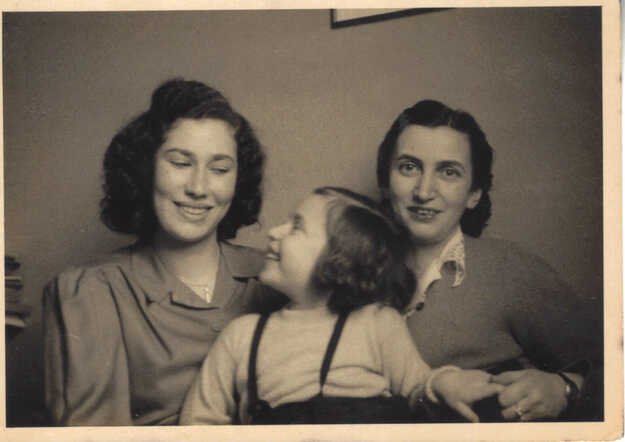
Gabi Goslar is a Dutch-born Holocaust survivor whose life is closely connected to one of history’s most well-known stories, that of Anne Frank. Although Gabi was still a baby during the Second World War, she became part of an important chapter in Holocaust history because of her family’s experiences. Her older sister, Hannah Pick-Goslar, was one of Anne Frank’s closest childhood friends, making the Goslar family an important part of the events remembered from that time. Today, many people search for Gabi Goslar because they want to understand the real people behind Anne Frank’s story and learn how ordinary families survived extraordinary hardships.
What makes Gabi Goslar’s story so meaningful is that it represents the experience of thousands of Jewish children whose lives changed forever during World War II. She survived one of the darkest periods in modern history, rebuilt her life after the war, and became a symbol of hope and resilience. While she has lived a much more private life than some other Holocaust survivors, her family’s journey reminds us that behind every historical event are real people with dreams, fears, and remarkable strength.
| Fact | Details |
|---|---|
| Full Name | Rahel Gabriële Ida (Gabi) Goslar |
| Born | October 25, 1940 |
| Birthplace | Amsterdam, Netherlands |
| Nationality | Dutch-born, later lived in Israel |
| Known For | Holocaust survivor and sister of Hannah Pick-Goslar |
| Historical Connection | Family closely connected to Anne Frank’s story |
Why Is Gabi Goslar Still Remembered?
Many Holocaust survivors have shared their stories to educate future generations, and while Gabi Goslar remained mostly out of the public eye, her life continues to attract attention because of its historical importance. Her survival shows how even the youngest children were affected by Nazi persecution. Researchers, teachers, and readers often study her family’s experiences to better understand the human side of history rather than simply learning dates and events.
Her story also reminds people that history is not only about famous names. Thousands of families experienced similar struggles, and every survivor represents courage, determination, and hope. By learning about Gabi Goslar, readers gain a deeper understanding of the Holocaust and the lasting impact it had on individuals and families around the world.
| Topic | Information |
|---|---|
| Religion | Jewish |
| Sister | Hannah (Hanneli) Pick-Goslar |
| Childhood | Grew up during Nazi occupation |
| Concentration Camp | Bergen-Belsen |
| After the War | Rebuilt life in Israel |
| Legacy | Symbol of resilience and Holocaust remembrance |
“Every survivor’s story reminds us that hope can survive even in the darkest moments.”
The story of Gabi Goslar is not only about surviving war but also about preserving memory. Her family’s experiences continue to teach new generations why kindness, freedom, and respect for human rights matter. Even today, her name appears in Holocaust education because it helps people understand the real lives behind one of history’s greatest tragedies.
Gabi Goslar’s Early Life and Family Background
Gabi Goslar was born on October 25, 1940, in Amsterdam, the Netherlands, at a time when Europe was already facing the effects of World War II. She was born into a Jewish family that had once lived a peaceful and comfortable life. However, shortly after her birth, life became much more difficult because the Nazi government began introducing strict rules against Jewish families. Since Gabi was only a baby, she could not understand what was happening around her, but the decisions made during those years would shape the rest of her life.
Her parents, Hans Goslar and Ruth Goslar, wanted their children to grow up safely, but that became almost impossible under Nazi occupation. The family faced growing restrictions, including limits on where they could live, work, and travel. Gabi’s older sister, Hannah Pick-Goslar, was already friends with Anne Frank before the war changed everything. This friendship later became one of the reasons the Goslar family became known around the world.
The Goslar family valued education, kindness, and faith. Like many Jewish families, they hoped the difficult times would pass quickly. Instead, life became more dangerous every year. Jewish children were forced to leave their schools, families lost their jobs, and many people lived with constant fear. Although Gabi was too young to remember much of those early years, her family’s experiences became an important part of Holocaust history.
Growing up during wartime meant that simple childhood moments were replaced with uncertainty. Instead of enjoying a normal family life, the Goslar family spent their days worrying about safety and survival. Their story reflects the lives of thousands of Jewish families across Europe who were suddenly treated unfairly simply because of their religion.
Gabi Goslar and the Holocaust
The Holocaust changed every part of Gabi Goslar’s childhood. As Nazi control spread across the Netherlands, Jewish families were forced to follow harsh laws that limited their freedom. Eventually, the Goslar family was arrested and sent first to Westerbork transit camp before being deported to Bergen-Belsen concentration camp in Germany. Gabi was still very young, but she experienced conditions that no child should ever face.
Life inside Bergen-Belsen was extremely difficult. Food was scarce, disease spread quickly, and families lived in overcrowded conditions. Gabi’s mother died before liberation, and later her father also lost his life because of the terrible conditions in the camp. Despite these heartbreaking losses, Gabi and her sister Hannah survived. Their survival was a result of incredible determination, hope, and the support they gave each other during the darkest days of their lives.
| Year | Event |
|---|---|
| 1940 | Gabi Goslar was born in Amsterdam |
| 1942–1943 | Anti-Jewish restrictions increased |
| 1943 | Family sent to Westerbork camp |
| 1944 | Deported to Bergen-Belsen |
| 1945 | Camp liberated by Allied forces |
| After 1945 | Sisters began rebuilding their lives |
The Holocaust left deep emotional scars on every survivor. For Gabi, surviving meant growing up without both parents and starting life again with very little. Even after the war ended, many survivors struggled with grief, illness, and the memories of what they had experienced. Her story reminds readers that survival did not mean the suffering immediately ended.
Gabi Goslar’s Connection to Anne Frank
Many people search for Gabi Goslar because of her family’s connection to Anne Frank, one of the world’s most famous Holocaust victims. While Gabi herself was too young to personally know Anne well, her older sister Hannah was one of Anne Frank’s closest childhood friends. Before the war, the two girls spent time together in Amsterdam, attended school, and shared a happy childhood before Nazi persecution separated their lives.
One of the most emotional parts of Holocaust history is the final meeting between Hannah Pick-Goslar and Anne Frank inside Bergen-Belsen concentration camp. The girls were held in different sections of the camp but managed to speak through a fence. Hannah even tried to pass food to Anne, hoping to help her survive. Sadly, Anne Frank died only weeks before the camp was liberated. Because of this meeting, Hannah’s memories became one of the most valuable eyewitness accounts of Anne Frank’s final days, and Gabi’s family became permanently connected to Anne’s story.
| Topic | Gabi Goslar | Anne Frank |
|---|---|---|
| Born | 1940 | 1929 |
| Childhood | Amsterdam | Amsterdam |
| Holocaust Experience | Bergen-Belsen survivor | Bergen-Belsen victim |
| Famous For | Holocaust survivor | Diary of Anne Frank |
| Legacy | Family history and survival | Worldwide symbol of hope |
The connection between these two families helps people understand that history is made up of real friendships and real families. It also shows how different lives were affected by the same tragic events.
Life After World War II
After the Second World War ended, Gabi Goslar and her sister faced the difficult challenge of rebuilding their lives. They had lost both parents and had to begin again with very little support. Like many Holocaust survivors, they carried painful memories while trying to create a hopeful future. Eventually, the sisters moved to Israel, where they were able to build new lives surrounded by a growing Jewish community.
Although Gabi chose to live a mostly private life, her family’s experiences remained important to Holocaust education. Her sister Hannah spoke publicly for many years about Anne Frank and their shared experiences. Through these stories, the Goslar family’s history continued to educate students, historians, and readers around the world. Gabi’s life reminds us that surviving tragedy requires not only courage but also the strength to move forward despite unimaginable loss.
Today, Gabi Goslar’s story continues to inspire people because it highlights resilience, hope, and the importance of remembering history. Every survivor’s story helps future generations understand why tolerance, human rights, and peace should never be taken for granted.
“Remembering the past helps build a better future.”
Frequently Asked Questions About Gabi Goslar
1. Who is Gabi Goslar?
Gabi Goslar is a Dutch-born Holocaust survivor and the younger sister of Hannah Pick-Goslar, a close childhood friend of Anne Frank.
2. How is Gabi Goslar connected to Anne Frank?
Her older sister Hannah was Anne Frank’s best friend before World War II, making the Goslar family closely connected to Anne Frank’s story.
3. Did Gabi Goslar survive the Holocaust?
Yes. Gabi survived Bergen-Belsen concentration camp and later rebuilt her life after the war.
4. Where did Gabi Goslar live after World War II?
After the Holocaust, she eventually settled in Israel, where she spent most of her later life.
5. Why is Gabi Goslar important today?
Her life represents the experiences of Jewish children during the Holocaust and reminds future generations about the importance of remembering history, protecting human rights, and promoting peace.
Read more :Vivian Ridge: The Untold Life Behind Bob Ross Before Worldwide Fame