

Techoelite Smart Homes has emerged online as a phrase linked with connected living, home automation, and modern residential technology. The concept focuses on homes where lighting, security, climate, entertainment, and other systems can communicate through connected technology.
However, the name needs some context. Public information does not establish Techoelite as one major hardware manufacturer. Several current sources describe “Techoelite” as a category or content concept surrounding premium integrated smart homes. [Insert Official Techoelite Reference Link Here]
That distinction matters. It changes how readers should understand the name.
Rather than one famous inventor or founder, Techoelite Smart Homes represents a modern approach to residential technology. Its appeal comes from integration. Individual gadgets become more useful when they work together.
Techoelite Smart Homes at a Glance
| Profile | Details |
|---|---|
| Name | Techoelite Smart Homes |
| Category | Smart Home Technology |
| Main Focus | Home automation and connected living |
| Core Areas | Security, lighting, climate, entertainment |
| Technology | Connected devices, sensors, apps, hubs |
| Current Identity | Smart-home concept and online content presence |
| Geographic Scope | Online/global smart-home audience |
| Official Founder | No reliably verified public record found |
Available public material describes Techoelite Smart Homes around home improvement, lifestyle, automation, and connected-home ideas. A separate Techoelite Smart Homes site also presents itself as a destination for home improvement, interior design, and lifestyle inspiration.
The Story Behind the Techoelite Concept
The rise of Techoelite Smart Homes reflects a broader shift in residential technology.
Early smart homes often depended on isolated products. Homeowners bought a smart bulb, camera, speaker, or thermostat. Each product usually had its own application.
That model created convenience, but it also created fragmentation.
Modern smart-home systems aim for something different. Devices communicate with one another. A door sensor can trigger lights. A motion detector can activate security recording. A thermostat can respond to occupancy.
This connected approach sits at the center of the Techoelite concept.
Current Techoelite material describes smart homes as connected environments where lighting, security, climate control, appliances, and entertainment can operate through automation.
The idea also extends beyond technology.
Techoelite Smart Homes content connects automation with interior design, home improvement, gardening, real estate, and lifestyle topics. Its public site lists several of these areas alongside smart-home material.
That broader focus gives the concept a lifestyle dimension.
The home becomes more than a collection of devices. It becomes an environment designed around routines.
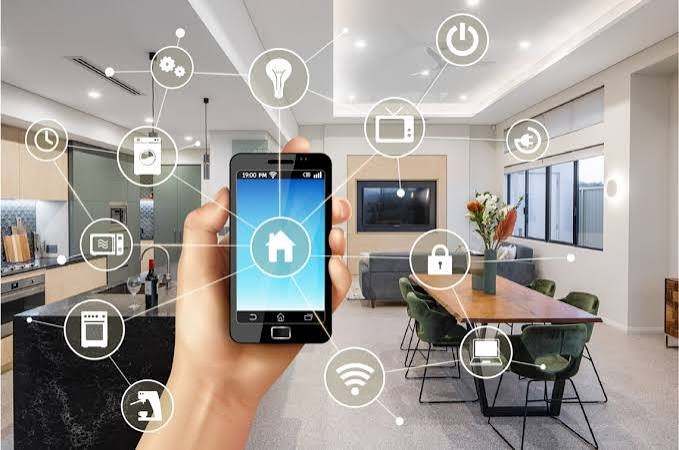
How the Techoelite Smart Home Vision Works
The basic idea is simple.
Different household systems connect through a communication network. Users then control those systems through an application, hub, voice interface, or automated rules.
Lighting provides one obvious example.
Instead of switching every light manually, homeowners can create schedules. Lights can turn on at selected times. Sensors can react to movement. Some systems can adjust lighting according to different routines.
Security is another major component.
Smart locks, cameras, motion sensors, and door sensors can work together. Notifications can reach a homeowner remotely when selected activity occurs.
Climate control adds another layer.
Smart thermostats can follow schedules and respond to occupancy. This can reduce unnecessary heating or cooling. The exact savings depend on the property, equipment, climate, and user behavior.
Entertainment can also become part of the same ecosystem.
Televisions, speakers, streaming devices, and lighting can follow preset scenes. A movie routine might lower the lights and activate selected entertainment equipment.
Techoelite-related material repeatedly highlights this integrated approach. The emphasis remains on convenience rather than simply collecting smart gadgets.
Technology That Defines the Experience
Connectivity forms the foundation.
Wi-Fi remains common for many consumer devices. Other systems can use technologies such as Zigbee or Z-Wave. Matter has also become an important development in smart-home interoperability.
The reason matters.
Homeowners do not want every device trapped inside a separate ecosystem.
A more interoperable environment can make future upgrades easier. One current Techoelite guide identifies Matter adoption as a major development for connected homes.
Sensors are equally important.
A smart home cannot automate intelligently without information. Motion sensors detect movement. Door sensors detect openings. Temperature sensors monitor environmental conditions.
The system then uses those signals.
For example, a sensor might detect movement after sunset. The automation system could activate hallway lighting. Another rule might turn the lights off after inactivity.
This creates the feeling of an intelligent home.
The intelligence comes from the relationship between devices.

Why Techoelite Smart Homes Attract Attention
Convenience remains one of the strongest attractions.
People want fewer repetitive tasks. Automation can handle many small actions throughout the day.
Security is another reason.
Remote notifications can help homeowners monitor selected activity while they are away. Cameras and smart locks can provide additional control, although their effectiveness depends heavily on correct installation and security settings.
Energy management also matters.
Automated schedules can prevent lights or climate systems from operating unnecessarily. The result may be lower energy consumption, although no fixed savings figure applies to every household.
Accessibility creates another potential benefit.
Voice controls and automated routines can make certain household functions easier to operate. This can be useful for people who find traditional controls inconvenient.
Yet smart-home technology has limitations.
More connected devices create more potential security points. Weak passwords, outdated firmware, and poorly configured networks can expose devices to unnecessary risks.
Compatibility also deserves attention.
A homeowner should check whether new products work with the existing ecosystem before purchasing them.
What Buyers Should Know Before Building One
The biggest mistake is starting with gadgets.
Start with needs instead.
A homeowner should identify the problems the system needs to solve. Security may come first for one family. Energy management may matter more to another.
The next step involves compatibility.
Check supported platforms and communication standards. Matter support can be useful, but buyers should still verify specific device compatibility.
Network quality matters too.
A sophisticated smart-home setup depends on reliable connectivity. Weak Wi-Fi can undermine an otherwise expensive installation.
Privacy deserves equal attention.
Connected cameras, microphones, locks, and sensors can generate sensitive information. Strong passwords, two-factor authentication, network separation, and regular firmware updates can reduce unnecessary exposure.
Professional installation may make sense for larger systems.
Simple devices can often be installed by homeowners. Whole-home automation can become considerably more complicated.
The Future of Techoelite Smart Homes
The direction of smart-home technology is moving toward deeper integration.
Matter is one major piece of that transition. The standard aims to improve interoperability between compatible smart-home products.
Automation is also becoming more sophisticated.
Future systems are likely to rely less on constant manual commands. Instead, routines may increasingly respond to occupancy, schedules, environmental conditions, and user preferences.
Artificial intelligence may add another layer.
Instead of creating every automation manually, homeowners could eventually describe desired routines in natural language. The system could then translate those instructions into compatible actions.
Still, technology should remain practical.
A smart home does not become better simply because it contains more devices. Good design depends on reliability, useful automation, security, and ease of control.
That principle fits the broader Techoelite concept.
The goal is a home that works more intelligently without becoming harder to manage.
Key Takeaways
- Think integration first: Connected systems matter more than individual gadgets.
- Check compatibility: Verify platforms before buying new devices.
- Protect privacy: Secure accounts, networks, and firmware.
- Automate purposefully: Build routines around real household needs.
Disclaimer: This profile is compiled from publicly available website material, current online references, and other publicly accessible information. Where ownership, authorship, or personal details could not be independently verified, they have not been presented as established facts. This article is intended solely for educational and informational purposes.
Read more:Techsslaash Biography: The Story Behind the Digital Platform